Destination Guide
Maldives
Overwater villas, private islands, and the world's most photographed water.
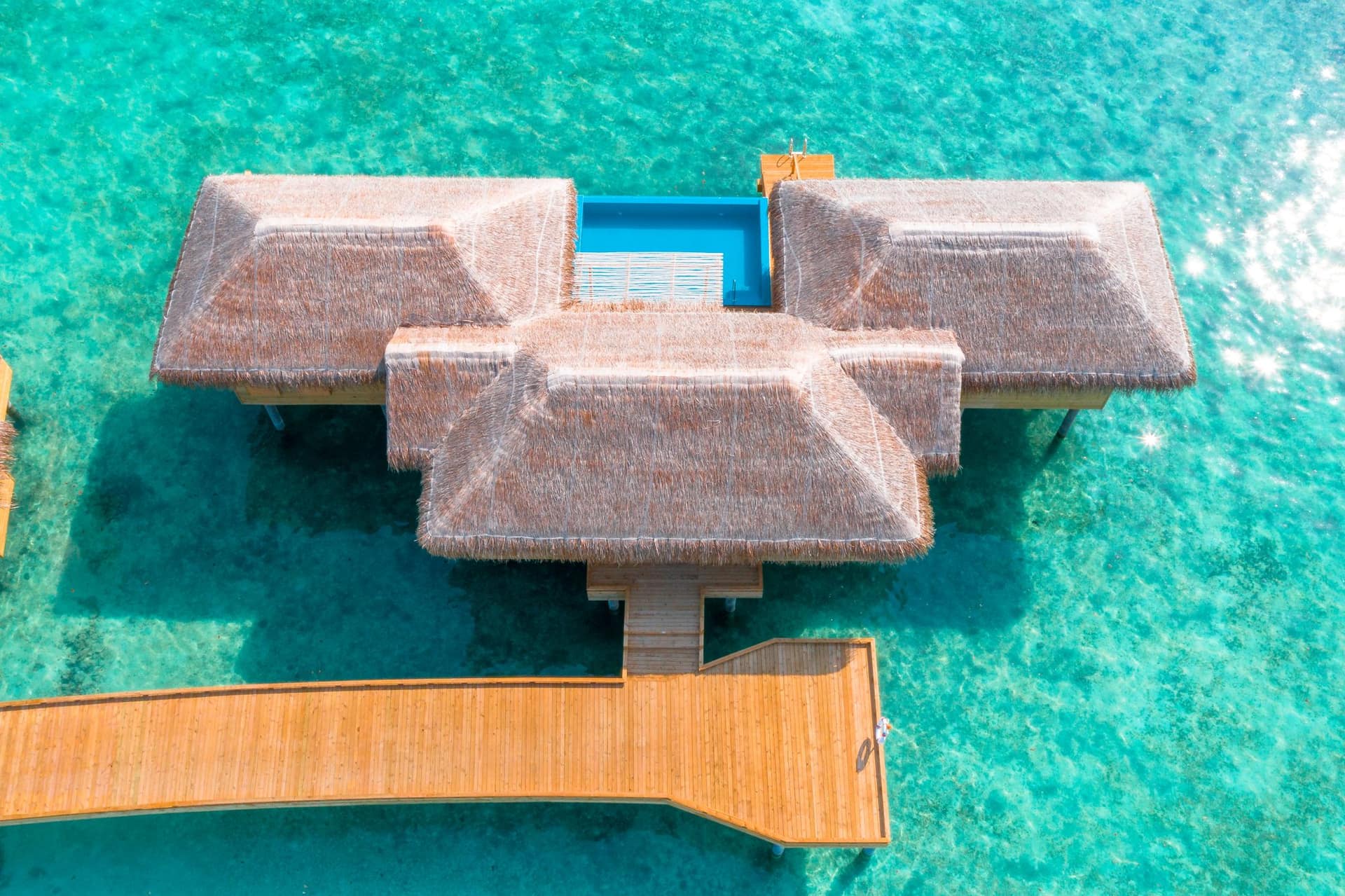
The Maldives is the destination that defines luxury escape: 26 atolls of low-lying coral islands scattered across the Indian Ocean, most luxury resorts occupying an island of their own. You arrive by seaplane or speedboat, settle into a villa built over a turquoise lagoon, and — by design — do very little except swim, dine, and disconnect.
It is also a destination that rewards planning. The season you choose changes both the weather and the price; the resort you choose dictates your transfer cost and travel style; and the gap between the quoted room rate and the real out-the-door cost catches first-timers out. This guide walks through each decision, then points you to our resort reviews and cost breakdowns so you can build the trip with eyes open.
We're an independent editorial guide, not a booking engine — we don't earn more by sending you somewhere pricier. Everything below is framed as honest ranges from published rates and our research, current as of September 2026.
Overview: what the Maldives is (and isn't)
The Maldives is the apex of the do-nothing luxury holiday. The core product is the overwater villa — a private deck stepping into the lagoon, often with a glass floor panel, a plunge pool, sometimes a slide or a retractable roof. Around it you get house-reef snorkeling, a spa, a few restaurants, and water clarity that genuinely matches the brochure. The privacy is structural: with most resorts on their own island, the only other guests are fellow couples.
What it isn't is a destination for sightseeing, nightlife, or variety. There is no town to wander from a resort island, no change of scene without another paid transfer. That trade — total seclusion in exchange for limited activity — is exactly what makes it perfect for honeymooners and milestone trips, and wrong for travelers who want to explore. Be honest about which you are before you book.
When to go
The Maldives has two seasons. November through April is the dry season — reliably sunny, calm seas, and the best snorkeling visibility — and it's the window we recommend for a first trip. December through March is peak: the most settled weather, the highest demand, and the top rates. May through October is the green (monsoon) season: lower prices and fewer crowds, but a real chance of rain and rougher water.
The shoulder months — late April and November — are the value sweet spot, balancing mostly good weather with softer pricing. The month table below maps the year at a glance. If your dates are flexible, booking the shoulder or green season is the single biggest lever on cost.
How to get there
Nearly everyone flies into Velana International Airport in Malé, the country's single gateway. From the US, round-trip airfare runs roughly $1,000–$1,200 per person, typically via a hub like Dubai, Doha, or Istanbul, with total travel time commonly 18–24+ hours each way. There's no avoiding the distance — it's part of the price of the place.
From Malé you reach your resort island by seaplane or speedboat. A seaplane (roughly $250–$600 per person) serves the farther atolls and is scenic, but operates only in daylight — a late landing can mean an overnight near the airport. A speedboat ($100–$300 per person) serves closer resorts and is faster to arrange and cheaper. Your resort's location sets the transfer, so factor it into both your budget and your arrival logistics. We break the full journey and its costs down in our Maldives trip cost guide.
Where to stay
The Maldives is a resort destination, so choosing the island is choosing the holiday. Our reviews cover the properties that define the top tier: Soneva Jani for barefoot-luxury overwater villas with retractable roofs and slides; Four Seasons Maldives for polished, family-capable luxury; Waldorf Astoria Maldives for design-led grandeur; the St. Regis Maldives for butler-serviced refinement; and Conrad Maldives Rangali Island, home of the famous underwater restaurant and villa.
Start with our full reviews of Soneva Jani, the Four Seasons Maldives, the Waldorf Astoria Maldives, the St. Regis Maldives, and Conrad Maldives Rangali Island. For curated shortlists, see our guide to the best Maldives honeymoon resorts and our ranking of the best overwater bungalows. Match the resort to your priorities — seclusion, design, dining, or transfer convenience — rather than to the prettiest single photo.
How many nights
Given how long the journey is, we recommend a minimum of four to five nights — fewer and the travel eats too much of the trip. Seven to ten nights is the sweet spot: long enough to fully unwind into the rhythm of the island, short enough that the single-island setting doesn't start to feel repetitive.
A focused five-night honeymoon is the most popular shape, keeping the resort cost contained while still justifying the airfare. If you want to extend, some travelers pair a few Malé-adjacent speedboat nights with a longer seaplane stay, or combine the Maldives with a stop in Dubai or Sri Lanka to break up the journey and add variety.
Costs
A Maldives trip is four costs stacked: flights (~$1,000–$1,200 per person round trip), transfers ($250–$600 seaplane or $100–$300 speedboat per person), the resort ($500–$2,000+ per night), and food-and-extras ($150–$400+ per person per day where not included). A five-night honeymoon for two realistically runs from around $5,000 at the budget end to $15,000–$25,000+ at luxury.
The two costs first-timers miss are transfers and meal plans — neither is in the headline villa rate. For the full breakdown with sample budgets, see our guide on how much a trip to the Maldives costs and our overwater bungalow cost guide. And if you're still deciding whether to commit, our honest take on whether the Maldives is worth it lays out who comes home thrilled and who would be happier elsewhere.
Where to stay in Maldives
The resorts we have reviewed and scored in Maldives, ranked by our editorial score. Check live rates on any of them below.
Honeymooners who want the best villa in the country
From $2,400/night · Our score 9.6/10
Travelers for whom design and service are the point
From $2,300/night · Our score 9.5/10
Four Seasons Resort Maldives at Landaa Giraavaru
Families who want world-class service
From $1,600/night · Our score 9.3/10
Waldorf Astoria Maldives Ithaafushi
Food-led luxury travelers
From $2,000/night · Our score 9.2/10
Travelers who want space and a beach to themselves
From $1,900/night · Our score 9.2/10
Conrad Maldives Rangali Island
Food-led travelers
From $700/night · Our score 9.1/10
The St. Regis Maldives Vommuli Resort
Marriott Bonvoy members
From $1,400/night · Our score 9.0/10
Every “Check Rates” button opens live availability for that resort on Expedia. Rates as of September 2026. Always verify current pricing.
Frequently Asked Questions
- November through April is the dry season and the best window — sunny, calm seas, and excellent snorkeling visibility. December through March is peak and priciest; late April and November are the value sweet spot; and May through October is the green season, with lower rates but a higher chance of rain.