Destination Guide
French Polynesia
Where the overwater bungalow was invented — and where Mount Otemanu still justifies the journey.
French Polynesia is the birthplace of the overwater bungalow. Three hoteliers built the first ones on Moorea in the 1960s because the island's beaches were too poor to sell, and in doing so created the single most recognizable image in luxury travel. Sixty years later the Maldives has more of them, but Bora Bora still has the thing the Maldives cannot copy: a volcanic mountain rising straight out of the lagoon you are floating in.
That silhouette — Mount Otemanu, seen from a bungalow deck — is what you are actually buying. Maldivian atolls are flat coral rings; the water is arguably clearer and the villas are frequently larger and newer. French Polynesia trades some of that for scenery with vertical drama, a genuine local culture you can encounter outside the resort gates, and a lagoon that reads as a natural amphitheater rather than an infinity of open ocean.
It is a long way and it is expensive, and the logistics are more involved than most first-timers expect. This guide covers the islands worth your time, how the flight and inter-island connections actually work, when to go, and what to budget. Everything below is framed as honest planning ranges from published schedules, rates and our research, current as of September 2026.
The islands: Bora Bora, Moorea, Tahiti and beyond
Bora Bora is the headline and deserves it. A central volcanic island ringed by a barrier reef and a necklace of sandy motu — small islets — it holds the highest concentration of luxury overwater resorts in the South Pacific, almost all of them built on the motu looking back at Mount Otemanu. The lagoon is calm, shallow and startlingly colored, and the mountain view from the water is genuinely unrepeatable elsewhere.
Moorea, 30 minutes by ferry from Tahiti, is the value alternative: jagged green peaks, Cook's and Opunohu bays, better hiking, more affordable resorts and a more lived-in feel. Tahiti itself is the arrival point rather than the destination — Papeete has the country's only international airport, a good market and restaurant scene, and black-sand beaches, but few travelers build a trip around it. Further out, Taha'a is known for vanilla and a superb coral garden, and the Tuamotu atolls — Rangiroa, Fakarava — are the diving destinations, closer in feel to the Maldives than to Bora Bora.
How you actually get there
There are no direct flights to Bora Bora from anywhere. Every itinerary routes through Faa'a International Airport (PPT) in Papeete, Tahiti — served by Air Tahiti Nui from Los Angeles, Paris and Tokyo, Air France from Paris, French Bee from Paris and San Francisco, and Air New Zealand from Auckland. From the US West Coast the flight is roughly eight hours; from the East Coast, budget a full day door to door with the domestic connection.
From Papeete you take a domestic Air Tahiti or Air Moana flight of about 50 minutes to Bora Bora Airport (BOB), which sits on Motu Mute, an islet northwest of the main island. Every arriving guest leaves the terminal by boat: resorts run their own transfers directly to the property, typically 10 to 20 minutes, and a free shuttle connects the airport to Vaitape, the main town. Build in the connection time — inter-island flights are frequent but the schedule is not infinitely elastic, and a missed connection in Papeete can cost you a night.
When to go
French Polynesia's dry season runs May through October, and it is the window we recommend. Humidity drops, the trade winds are steady, the lagoon is clear, and rain is brief when it comes. June through August is peak — book activities and restaurants well ahead — while May and September deliver almost the same weather at lower rates with fewer people.
November through April is the wet, warmer, more humid season, with the cyclone risk concentrated in that window. Rates fall meaningfully and the islands are greenest, but afternoon downpours are common and visibility for diving is less reliable. One deliberate exception: July and August coincide with Heiva, the country's major cultural festival, with dance competitions, outrigger canoe racing and music across the islands — if that appeals, the peak-season premium buys you something real.
Where to stay in Bora Bora
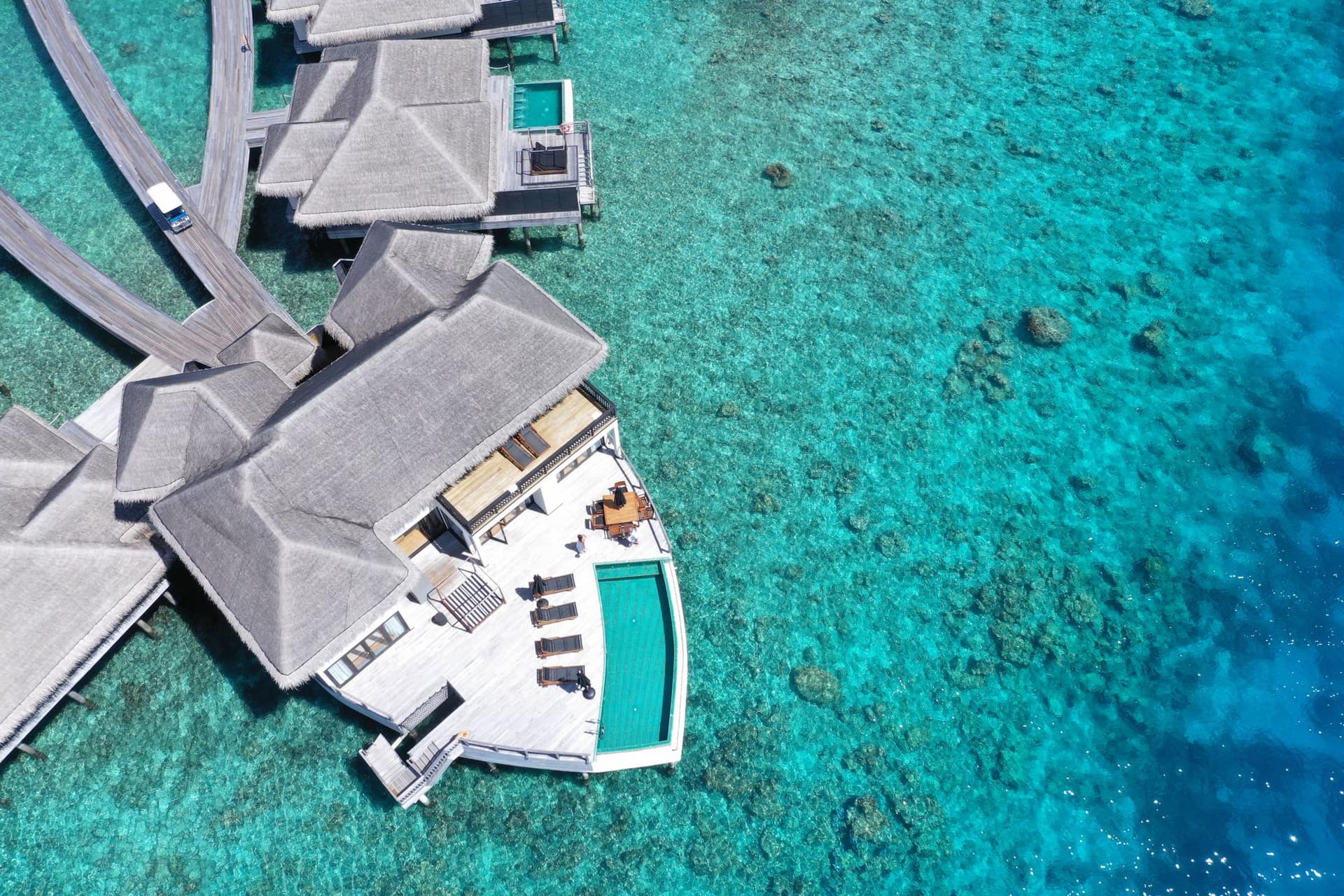
The Four Seasons Resort Bora Bora is our reference property and the one we have reviewed in full: 77 overwater bungalows and seven beachfront villas on a private motu on the eastern side of the lagoon, directly opposite Mount Otemanu. The bungalows use traditional teak, high ceilings and pandanus-thatch roofs, each with a private deck, loungers, a dining table and steps straight into the lagoon; a subset of specialty bungalows add temperature-controlled plunge pools.
The wider field includes the St. Regis, the Conrad on Motu To'opua, the InterContinental Thalasso — whose bungalows are cooled by deep seawater — and the smaller Le Bora Bora. The single most important choice is which side of the lagoon the resort sits on, because it determines whether Otemanu is in front of you or behind you. Our ranked guide to the best Bora Bora overwater bungalows works through that resort by resort.
What it costs
French Polynesia is expensive in a specific way: the resorts are priced like the Maldives, but food and drink are more expensive again because almost everything is imported and the local currency is pegged to the euro. Overwater bungalows at the luxury tier commonly run from roughly $900 to $2,000+ per night, with the largest villas and pool bungalows well above that. Very few resorts are all-inclusive, so dining is an additional and substantial line item — plan on $200–$400 per couple per day at resort restaurants.
Flights are the other big block: Los Angeles to Papeete round trip commonly runs $1,000–$1,800 per person, and the Papeete–Bora Bora domestic leg adds roughly $400–$600 per person round trip. A realistic week for two, all in, starts around $12,000 and climbs quickly. Our overwater bungalow cost guide sets those numbers against the Maldives and the Caribbean so you can see where the money actually goes.
How it compares to the Maldives
The honest summary: the Maldives generally wins on villa product, water clarity and value per night; French Polynesia wins on scenery, culture and the specific magic of the Otemanu view. The Maldives puts you on a private island where the resort is the entire world. Bora Bora puts you in a lagoon with a working island in the middle of it — you can take a boat to Vaitape, eat at a roulotte food truck in Papeete, and encounter Polynesia rather than only being served by it.
Travel time is the tiebreaker for many. From the US East Coast the Maldives is typically 18–24+ hours; from the West Coast, French Polynesia is roughly eight hours plus a domestic hop. Where you live may make the decision for you. Our full Maldives vs Bora Bora comparison goes through villas, reef, cost and honeymoon fit line by line.
Where to stay in French Polynesia
The resorts we have reviewed and scored in French Polynesia, ranked by our editorial score. Check live rates on any of them below.
Honeymooners who want the Mount Otemanu view from the deck
From $1,500/night · Our score 9.2/10
Every “Check Rates” button opens live availability for that resort on Expedia. Rates as of September 2026. Always verify current pricing.
Frequently Asked Questions
- No. Every route goes through Faa'a International Airport (PPT) in Papeete, Tahiti, then connects on a roughly 50-minute Air Tahiti or Air Moana flight to Bora Bora Airport on Motu Mute. From there you reach your resort by boat — resorts run direct transfers of about 10 to 20 minutes.